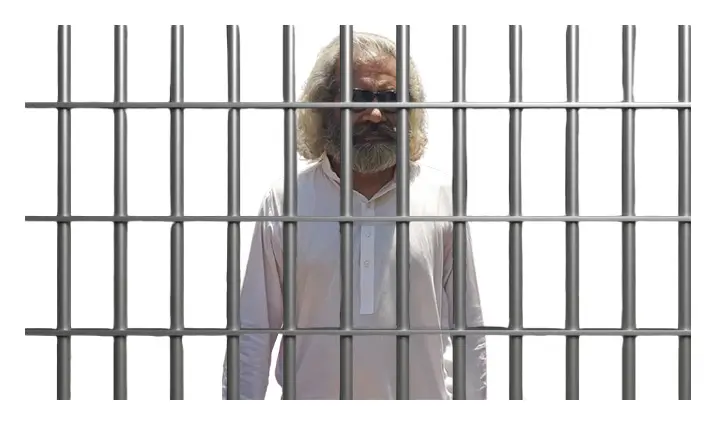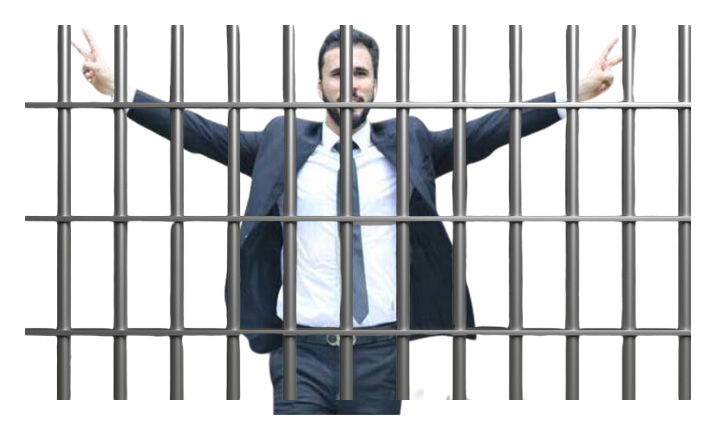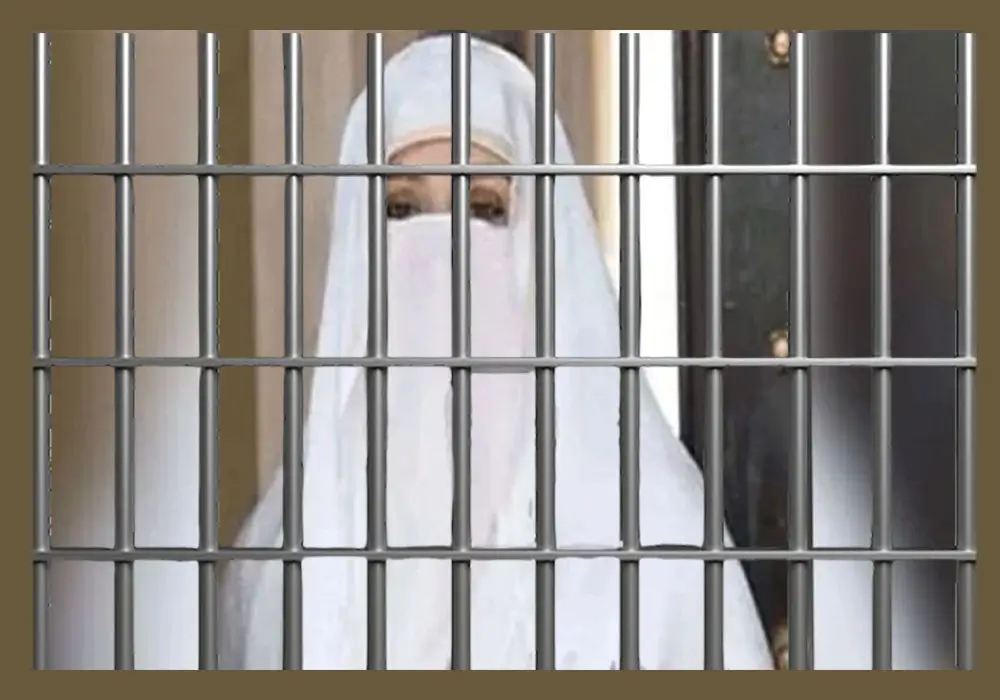
Bushra Bibi, also known as Bushra Khan, has emerged as a significant figure in Pakistan’s political landscape, not only as the wife of former Prime Minister Imran Khan but also as a spiritual guide and, more recently, a prominent leader in the Pakistan Tehreek-e-Insaf (PTI) protests. Known for her deep-rooted Sufi beliefs and private demeanor, Bushra has transitioned from a reclusive faith healer to a public figure leading thousands in the fight for her husband’s release. This blog post explores her life, her influence on Imran Khan, and her evolving role in Pakistan’s turbulent political arena.
Early Life and Spiritual Roots
Born in the early 1970s as Bushra Riaz Wattoo in Pakpattan, Punjab, Bushra hails from a conservative, politically active landowning family of the Wattoo clan, a sub-clan of the Manekas. Before marrying Imran Khan in 2018, she was married to Khawar Maneka, a senior customs official, for nearly 30 years, with whom she has three daughters and two sons. Her early life was marked by her devotion to Sufism, particularly as a follower of the 13th-century mystic Baba Farid, whose shrine in Pakpattan she frequented. As a faith healer, Bushra gained a small but dedicated following, respected for her spiritual guidance, which later drew Imran Khan to her.
Her spiritual influence on Khan, who has embraced Sufism for over three decades, was a cornerstone of their relationship. Khan has publicly praised her piety, stating in 2018 that he “did not catch a glimpse of my wife’s face until after we were married,” highlighting her observance of purdah (veiling). This spiritual connection, combined with rumors that she foresaw Khan’s rise to premiership in a dream, fueled public fascination and speculation, including unfounded claims of supernatural powers.
Marriage to Imran Khan and Early Political Influence
Bushra married Imran Khan in a private ceremony in January 2018, seven months before he became prime minister. The marriage, Khan’s third, sparked controversy due to allegations that it occurred before the completion of the Islamic waiting period (iddat) following her divorce from Maneka. Although a court convicted them in February 2024 for this, the verdict was overturned in July 2024. Despite her low public profile, Bushra was rumored to wield significant behind-the-scenes influence during Khan’s tenure (2018–2022), advising on ministerial appointments and participating in political discussions from behind a screen. These claims, however, were met with mixed reactions within PTI, with some party members uneasy about her unelected influence.
Legal Battles and Imprisonment
Bushra Bibi’s life took a dramatic turn following Imran Khan’s ouster in April 2022. Both faced multiple legal cases, which PTI claims are politically motivated. In January 2024, they were sentenced to 14 years in the Toshakhana case for illegally selling state gifts worth over 140 million rupees ($501,000). In January 2025, they received 14 and 7 years, respectively, in the Al-Qadir Trust case, accused of accepting land worth billions from a real estate tycoon in exchange for favors. Bushra was released on bail in October 2024 but was rearrested after the Al-Qadir verdict. Allegations of mistreatment in prison, including claims of poisoning with “toilet cleaner” in February 2024 and inadequate medical care, sparked outrage among PTI supporters, though these remain unverified.
In November 2024, Bushra faced further legal scrutiny for comments allegedly implicating Saudi Arabia in Khan’s ouster, leading to cases under the Telegraph Act for inciting religious hatred and harming diplomatic ties. Imran Khan defended her, claiming her remarks were misconstrued, while former army chief Qamar Javed Bajwa called them “100% false.” These legal battles have only amplified her visibility as a polarizing figure.
Emergence as a Protest Leader
In November 2024, Bushra Bibi emerged as a central figure in PTI’s protests, leading thousands into Islamabad to demand Khan’s release. Standing atop a shipping container at D-Chowk, she urged supporters to hold a sit-in, defying Khan’s instructions to gather on the capital’s outskirts. This marked a significant shift from her previously private persona, positioning her as a de-facto PTI leader. Analysts like Mazhar Abbas noted her growing influence, though some PTI members expressed concern over her prominence, given Khan’s opposition to dynastic politics. Her leadership during the violent protests, which led to clashes with security forces, drew both admiration and criticism, with the government blaming her for the unrest.
Public Perception and Controversies
Bushra Bibi remains a polarizing figure. To PTI supporters, she is a symbol of resilience, stepping into the political fray on Khan’s orders to keep the party united. Her nearly year-long imprisonment and alleged mistreatment have earned her admiration, as noted by PTI spokesperson Zulfikar Bukhari. Critics, however, accuse her of overstepping her role, with some media outlets spreading unverified rumors of witchcraft or supernatural abilities, which her supporters dismiss as propaganda. Her comments on Saudi Arabia and her defiance during protests have also drawn ire from the government and strained PTI’s internal dynamics.
Her spiritual persona, rooted in Sufism, contrasts sharply with her emerging political role, leading to debates about her intentions. While Khan insists she has no political ambitions and acts solely as his messenger, her actions suggest a growing agency in PTI’s strategy.
Legacy and Future Role
As of July 2025, Bushra Bibi remains in custody, facing ongoing legal battles alongside Imran Khan. Her transformation from a private spiritual figure to a protest leader has redefined her public image, making her a key player in PTI’s fight for “Haqeeqi Azadi” (real freedom). Whether she will continue to lead PTI’s grassroots movement or return to her reclusive life once Khan is released remains uncertain. For now, Bushra Bibi stands as a testament to the complex interplay of spirituality, politics, and resilience in Pakistan’s volatile landscape.